Sunday, November 6, 2011
Water Kimchi Dongchimi 동치미
Here's is the finished product. I think the head of cabbage may have been way too big. It should have only filled the two half gallon jars and I'm thinking it should have a higher liquid to solid ratio. It will sit on my counter for a few days and then into the fridge it goes.
Making kimchi 막김치
Here are the ingredients for this version of kimchi. From left to right, napa cabbage, Korean radish (mu or moo), green onions, fish sauce, garlic, sugar, sweet rice powder, salted shrimp, yellow onion, coarse salt and coarse red pepper.
And here is the cabbage after being salted and resting for a couple of hours. Notice that it has wilted quite a bit.
This is the seasoning. It's a mixture of garlic, ginger, fish sauce, green onion, yellow onion and salted shrimp.
Wednesday, January 26, 2011
Kongnamul Korean Soybean Sprout Salad 콩나물
Kongnamul is a very popular side dish for Koreans. It almost always included in the banchan (side dishes) in Korean restaurants. I made this version a couple of days ago and took it to work. The 2 pounds batch was gone by the end of the day. One co-worker really liked it and even put it in the soup she was eating for lunch.

When preparing soybeans for cooking, it's important to pick them over and remove discolored ones and any bean skins that are still hanging on. A traditional Korean mother would snip the skinny tails off of each and every sprout before cooking. Thankfully, this is not usually the case anymore. In fact, the tails have a concentration of an ingredient that is great for hangovers. A very good excuse to be lazy.
Here's a closeup of a few individual sprouts. In her cookbook, Growing Up in a Korean Kitchen, Hi Soo Shin Hepinstall relates how musical notes are called soybean sprout heads by Korean children. It makes perfect sense. Also, it is believed that children who eat a lot of kongnamul will grow up straight and tall.
Here are the ingredients I used for a two pound batch of kongnamul. From left to right - ground sesame seeds, sesame oil, soy sauce, red pepper flakes, black pepper, green onion, salt and garlic.
The sprouts are put in a pot with a cup of boiling water. The sprouts are covered with a lid and cooked on high for about 3 minutes. Do not take the lid off the pot while the sprouts are cooking. Every Korean cook will tell you that the sprouts will taste "off" if the lid is removed too soon.
Drain the sprouts. I usually let them cool a bit also. In the meantime, finely chop the green onions and garlic. Mix with all the other ingredients except for the ground sesame and red pepper flakes.
Sprinkle with the ground sesame and red pepper flakes before serving.
Friday, January 7, 2011
Namdaemun 남대문 Great Southern Gate
This was taken in 2007 before the gate was burned by a mentally unstable man. The Southern Gate is considered the first cultural treasure of South Korea. I'm glad to have visited it before it was damaged. Restoration work is underway. It is scheduled to be completed in 2012.Thursday, January 6, 2011
Korean Seaweed Soup Miyeok Guk 미역국 Pt 3

Wednesday, January 5, 2011
Korean Seaweed Soup Miyeok Guk 미역국 Pt 2
I added more salt at the table.
Miyeok guk can also be based on a seafood broth and ingredients.
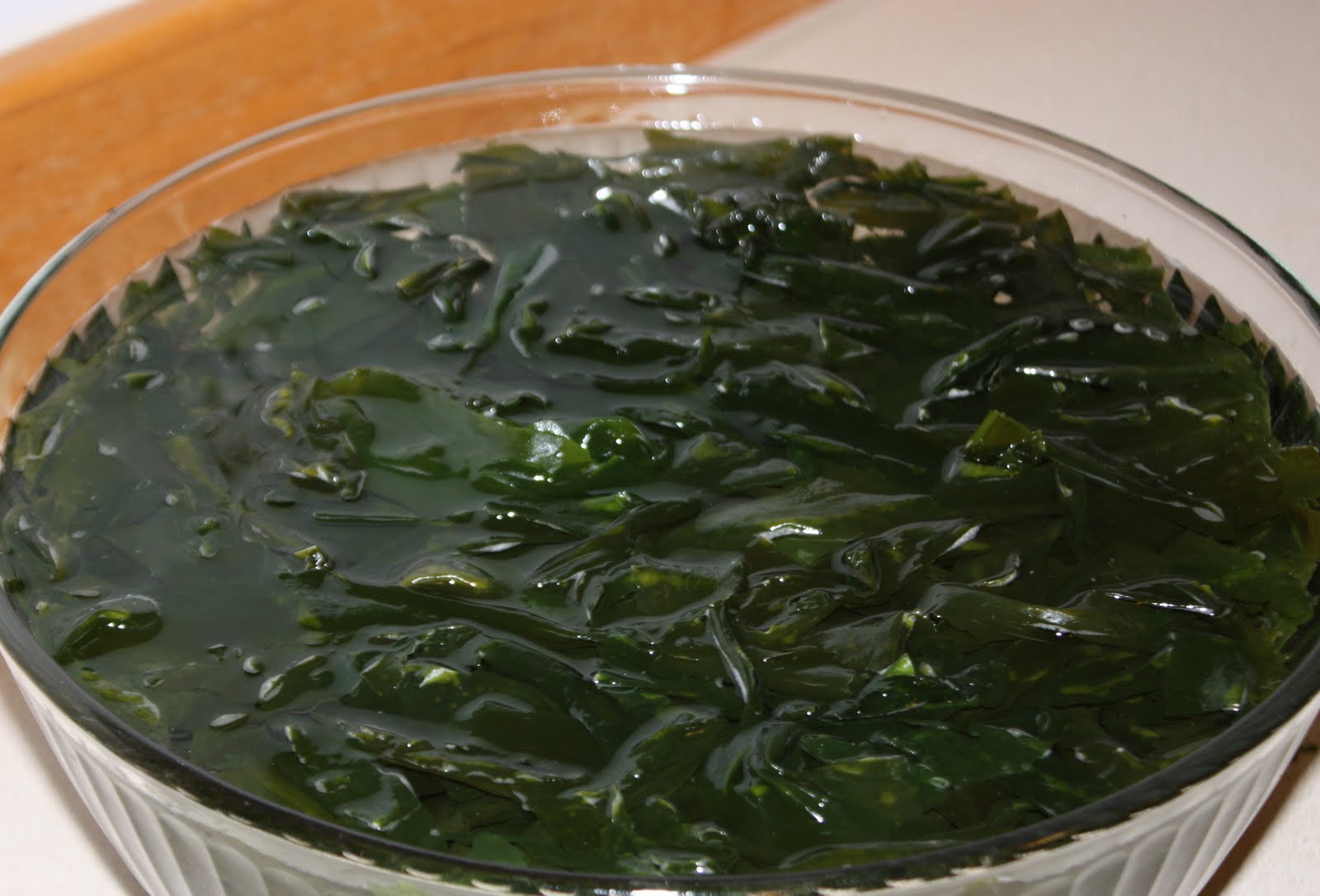
Here's the miyeok after it has soaked for 10 minutes.
After the seams are cut, the large pieces should be cut into smaller pieces.
Monday, January 3, 2011
Korean Seaweed Soup Miyeok Guk 미역국 Pt 1
Thursday, December 2, 2010
Super Pho and Teriyaki - Mount Vernon, WA
Wednesday, December 1, 2010
Super Pho and Teriyaki - Mount Vernon, WA
Here's a link to their website with location and menu. I love that they have lots of combos.
http://www.superphoandteriyaki.com/
Tuesday, August 31, 2010
Pho at Thai House - Mount Vernon, WA
Add the basil, lime, sprouts, sauces and jalapeno and dig in.
Monday, August 30, 2010
Tacos Tecalitlan 3 - Mount Vernon, WA
The woman working the counter knew just enough English to take my order but not to tell me what buche was other than it was pork. No problem. I'm advernterous. I enjoyed all four.
Friday, August 21, 2009
Cooking Korean Style Rice

One of the best books I purchased on my first trip to Seoul was “An Illustrated Guide to Korean Culture” prepared by the National Academy of the Korean Language. It contains chapters on 233 traditional key words. The first entry in the large food section is Bap 밥, steamed rice. This demonstrates how important rice is to Korean culture. By the way, raw rice is called ssal 쌀 and a rice plant is called byeo 벼. In Korean conversation to “eat bap” is synonymous to “having a meal”. I think this is the logical place to start writing about Korean cooking.
What kind of rice
Basic Korean rice is a medium grain rice that becomes sticky when cooked. In the US, Calrose medium grain rice is a very close substitute for imported Korean rice. It is sold at Costco as the Homai brand and by Rhee Brothers as both the Han Guk Mi and Rhee Chun Rice brands. Homai is what I use at home for everyday meals.
What to use to cook the rice
Rice can be cooked in a pot on the stove or using a rice cooker. Rice cookers can be simple and cheap or sophisticated pressure rice cookers that can cost hundreds of dollars. I have two cookers. One is a $30 Aroma model from Costco.

The other is a pressure rice cooker that I received as a gift.
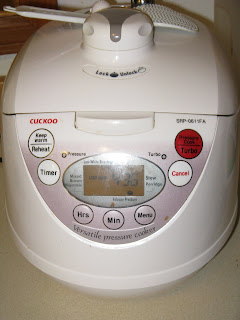
Rice cookers can be very convenient. If you follow the basic instructions for the cooker or on the rice bag, you should be able to produce a good batch of rice without a lot of fuss. On the other hand, it is a useful skill to be able to cook rice well without a special appliance. I’ve been using a regular American style 3 quart pot with a glass lid and a Korean cast aluminum pot gamasot 가마솥 with a black non-stick coating.

Each night for the past week I’ve been making a fresh pot of rice on the stove by cycling through the three different cookbooks mentioned in my previous post. I have made decent rice from each recipe. This is what I did tonight and it produced a very good batch.
My steps to cooking rice on the stove
1) Measure rice into the pot. Two cups will serve two or three people.
2) Run cold water over the rice while swishing it around with your fingers.
3) Tip the pot as needed to drain the water. Be careful not to dump the rice into the sink. Repeat until water is nearly clear.
4) Cover rice with cool water and let soak from 30 to 60 minutes.
5) Drain and cover the rice with the same amount of water as rice. Note: this does not mean the water should be at the same level as the rice in the pot. Two cups of water over two cups of rice will cover the back of your fingers if you gently place your hand flat, palm down, on top of the rice.
6) Cover the rice and bring to a boil on high heat. Stir and cover again.
7) Reduce heat to medium low for 10 minutes and then stir.
8) Reduce heat to low and then cook an additional 10 minutes.
9) Reduce heat to lowest setting and let sit until ready to serve.
This works on my stove but your results may differ. If you have hard rice at the end you should add a little water to the pot and turn up the heat and replace the cover. If the rice is too watery, you should take the lid off and turn up the heat. Stir the rice a bit to help the water evaporate. Try not to disturb the rice at the bottom as by now it has become a little hard. Your rice will improve if you practice and make adjustments to the cooking process.
Friday, August 14, 2009
Korean cooking from the beginning
The following books will be my reference materials along with quite a few other cookbooks and Korean food and culture books. These three are very worthy purchases:
http://www.amazon.com/Korean-Mothers-Cooking-Notes/dp/8973002996
http://www.amazon.com/Growing-up-Korean-Kitchen-Cookbook/dp/1580082815
http://www.amazon.com/Eating-Korean-Barbecue-Kimchi-Recipes/dp/0764540785/
I’m not recommending Amazon as the source of the books but it’s a good starting place to learn about them. Here is another link to A Korean Mother’s Cooking Notes http://www.hanbooks.com/kormotcookno.html with more information.
The next post will be about Korean style rice.
Wednesday, June 17, 2009
Gamjajeon Korean Potato Pancakes Part 2
Tuesday, June 16, 2009
Gamjajeon 감자전 Korean Potato Pancake
The recipe I use is adapted from Hi Soo Shin Hepinstall's "Growing up in a Korean Kitchen". Egg and cornstarch are mixed together and then chopped peppers, mushrooms, green onions and garlic are added.
Saturday, July 26, 2008
Japchae 잡채
Here's a picture of the Korean noodle dish Japchae. I made this for a Korean Language Meetup in Seattle. It's considered one of the best Korean dishes to take to a potluck dinner. It can be served at room temperature and keeps well. This version of Japchae contains flank steak, noodles, 3 kinds of mushrooms, onion, carrot, cucumber and bellflower root. It sounds simple but it's fairly labor intensive. All the ingredients are prepared separately and then tossed together at the end. I've made it several times and it's only become a little easier to prepare. I use a mandoline slicer to get the long strips of carrot and cucumber.
Tuesday, June 24, 2008
Shredded Radish Salad 무생채

Mu saengchae is one of my favorite side dishes. I always eat way more than I should and it's easy to make. This picture doesn't convey how spicy this version is. I used plenty of fine red pepper powder along with sugar, Korean brown rice vinegar and salt. I used two large radishes and I think the three of us will have it gone in another day. I use a Japanese mandoline to cut the radish. It makes it easy and looks good too. The recipe doesn't call for any garnishing but it looks naked without at least a sprinkling of sesame seeds for chopped green onion.
Friday, June 20, 2008
Pre-Cut Kimchi 막김치
Considering the cost of kimchi at Paldo, I've started investing the time to make our own kimchi. I made a couple of gallons of cubed radish kimchi a couple of weeks ago and Monday I made just as much cabbage kimchi. Tuesday, May 27, 2008
Jeotgal 젓갈 Part 2